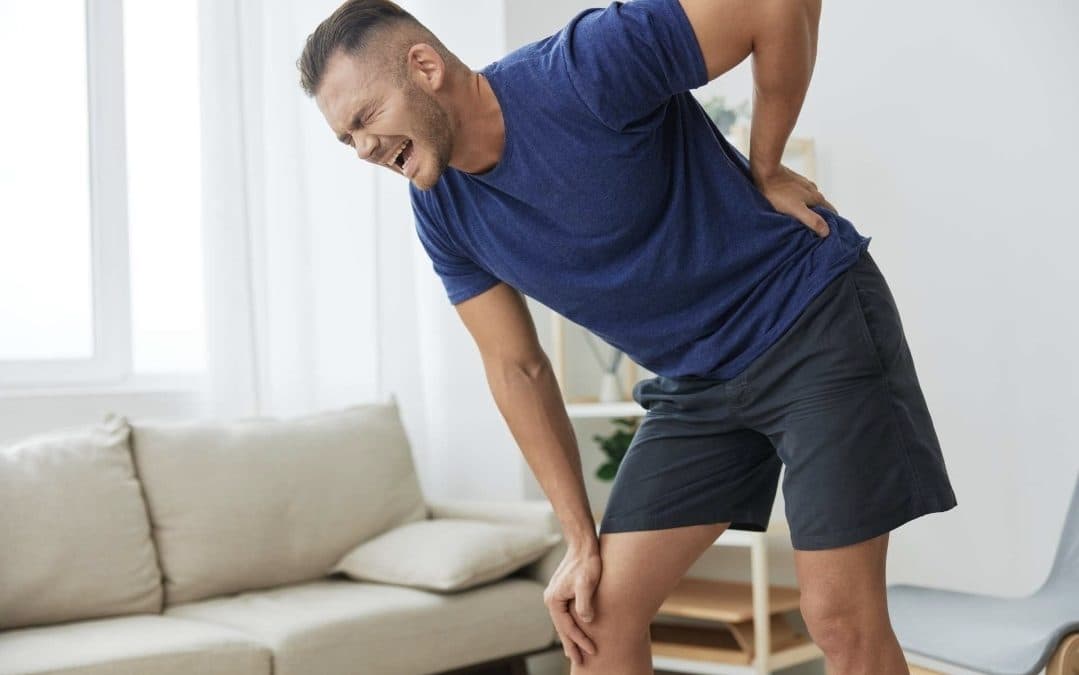
You wake up in the morning and your knees feel stiff. Walking down the stairs is uncomfortable. Standing up from a chair takes a little more effort than it used to. At first, you assume it’s just your knees. Maybe you’ve been more active lately. Maybe it’s age. Maybe you just slept wrong. But over time, something doesn’t add up.
Your knees hurt… but imaging doesn’t show major damage.
Your knees ache… but rest doesn’t really fix it.
Your knees feel sore… yet some days they feel almost normal again.
What most people don’t realize - and what we see every single day at Rutherford Spine & Wellness Center - is that knee pain is often not a knee problem at all. In many cases, it’s the result of underlying spinal dysfunction, especially in the lower back.
As providers of chiropractic care for back and knee pain Murfreesboro TN, we help patients understand a crucial but overlooked truth: when the lower back isn’t functioning properly, the knees are often forced to compensate. And over time, that compensation leads to pain.
Why Knee Pain Is Often Misdiagnosed
Knee pain is commonly treated as a local issue. Patients are told they have “wear and tear,” mild arthritis, or inflammation. While those factors can contribute, they don’t always explain why knee pain shows up without injury, why it affects only one knee, or why it keeps returning despite treatment.
What often gets overlooked is how the knee fits into the larger movement system of the body. The knee sits between the hip and the ankle, and it relies heavily on proper alignment above and below it. When the lower back is unstable or misaligned, the entire chain of movement is affected.
That’s why lower back pain causing knee pain Murfreesboro residents experience is far more common than most people realize.
How the Lower Back Influences Knee Function
The lower back plays a critical role in posture, balance, and movement. It houses nerves that travel down into the hips, legs, and knees. When those nerves are irritated or compressed, the signals that control muscle strength, coordination, and joint stability become disrupted.
When this happens, several things can occur:
- Muscles supporting the knee may weaken or fire incorrectly
- One leg may compensate more than the other
- Weight distribution becomes uneven
- Walking mechanics change
- Stress on the knee joint increases
Over time, the knee absorbs strain it was never designed to handle alone. The result is pain that seems to come from the knee - but originates in the lower back.
Why Knee Pain Often Appears on One Side
Many patients ask why only one knee hurts. This is another clue that the spine is involved. Lower back misalignment rarely affects both sides of the body equally. One side may experience more nerve compression or muscular imbalance than the other.
As a result:
- One leg may feel weaker
- One knee may ache more
- One hip may feel tighter
- One foot may strike the ground differently
These subtle asymmetries add up. Over time, the knee on the affected side begins to hurt - not because it’s damaged, but because it’s compensating.
This pattern is especially common in patients searching for a knee pain from back problems Murfreesboro chiropractor, because they’ve already tried addressing the knee directly with little success.
The Role of Nerve Irritation in Knee Pain
The nerves that exit the lower spine control muscle function and sensation throughout the legs. When these nerves are irritated, even slightly, the muscles surrounding the knee may not engage properly.
This can lead to:
- Reduced shock absorption
- Poor joint tracking
- Increased joint stress
- Inflammation without injury
The knee begins to ache during activities like walking, standing, or climbing stairs - not because the knee is broken, but because the nervous system isn’t coordinating movement correctly.
This is one of the most important concepts in chiropractic care: joint pain often reflects a communication problem, not just a structural one.
Why Rest and Ice Don’t Solve the Problem
Many people try to manage knee pain with rest, ice, braces, or anti-inflammatory medications. While these approaches may temporarily reduce discomfort, they don’t correct the underlying cause if the problem originates in the spine.
If the lower back remains misaligned:
- Nerve irritation persists
- Movement patterns remain faulty
- Compensation continues
- Pain returns
This cycle is frustrating and discouraging for patients who feel like they’ve “done everything right” but still aren’t improving.
How Chiropractic Care Breaks the Compensation Cycle
When patients come to us for chiropractic care for back and knee pain Murfreesboro TN, we don’t isolate the knee. We look at how the entire body is functioning - especially the spine.
Chiropractic care helps by:
- Restoring alignment in the lower back
- Reducing nerve irritation
- Improving muscle coordination
- Balancing posture and movement
- Reducing uneven stress on the knees
When spinal alignment improves, the knees often experience relief naturally - because they’re no longer compensating.
The Impact of Daily Movement Patterns
Most people don’t realize how daily habits contribute to knee pain. Sitting unevenly, favoring one leg while standing, carrying weight on one side, or walking with subtle imbalance all reinforce compensation patterns.
Over time, these habits place chronic stress on the knees. Chiropractic care not only corrects alignment but also helps patients become more aware of how they move - so they can support healing instead of unknowingly working against it.
Why Early Intervention Matters
Knee pain that originates from the spine often starts subtly. It may come and go. It may feel mild. That’s why many people delay addressing it. But over time, compensation leads to increased joint stress and inflammation.
Addressing spinal alignment early can:
- Prevent worsening knee pain
- Improve mobility
- Reduce the risk of chronic joint issues
- Support long-term joint health
Waiting until pain becomes severe often makes recovery more difficult.
Our Approach at Rutherford Spine & Wellness Center
At Rutherford Spine & Wellness Center, we focus on restoring balance and stability throughout the body. We don’t chase pain - we correct the foundation that allows pain to develop.
Our approach includes:
- Thorough spinal evaluation
- Precise chiropractic adjustments
- Focus on nervous system function
- Support for proper movement patterns
- Long-term spinal and joint health
By addressing the spine, we help the knees function the way they were designed to.
What Relief Really Looks Like
When spinal alignment improves, many patients notice changes they didn’t expect. Walking feels smoother. Standing feels more balanced. Stairs feel less intimidating. And knee pain that once seemed mysterious begins to fade.
That’s not coincidence - it’s correction.
When the lower back supports the body properly, the knees no longer have to compensate.
You Don’t Have to Live With Unexplained Knee Pain
If you’ve been dealing with knee pain that doesn’t make sense - or hasn’t responded to knee-focused treatments - it may be time to look higher up the chain.
The spine plays a critical role in how your knees function. And when the spine isn’t working properly, the knees often pay the price.
At Rutherford Spine & Wellness Center, we help patients uncover the real cause of their pain and correct it at the source.
If you’re ready to stop guessing and start getting answers, click here to set up a consultation.
We’re here to help you restore balance, reduce pain, and move forward with confidence.
Ready to feel better?
Schedule a consultation with Rutherford Spine & Wellness Center.