
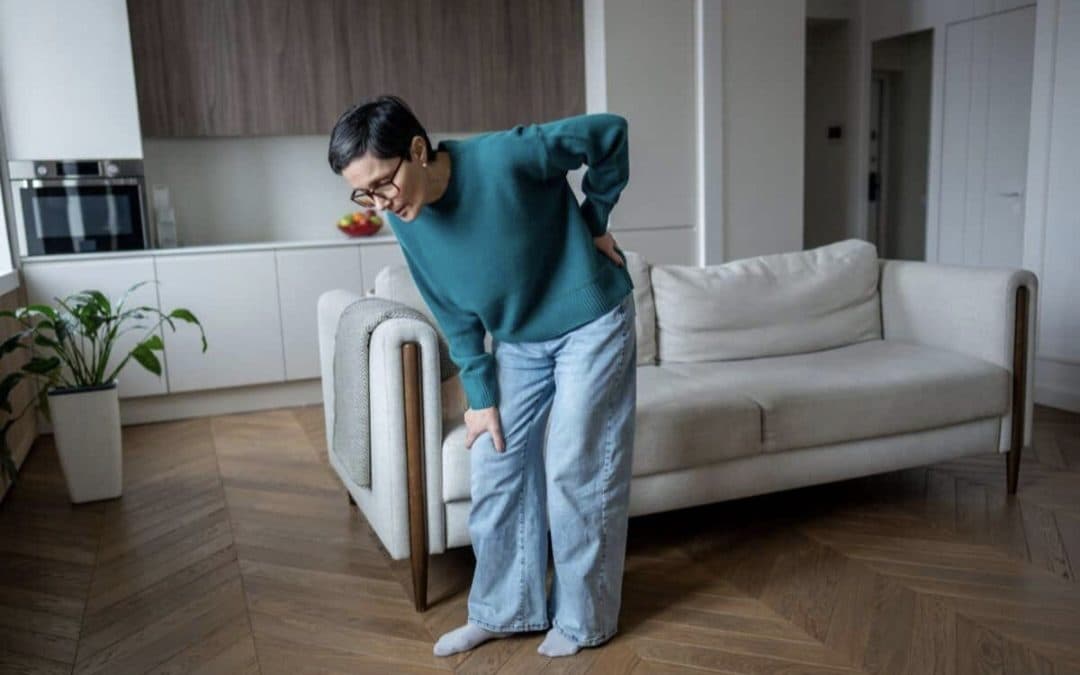
You go to stand up, and suddenly it happens.
That sharp, tight, almost frozen feeling in your lower back. You can’t stand fully upright right away. You pause. You brace your hands on your thighs. You move slowly, cautiously, waiting for your back to “release.” Sometimes it eases after a few steps. Sometimes it lingers for hours.
If you’ve ever thought, “Why does my back lock up when I stand?” you are not alone. We hear this exact phrase all the time in our office.
And here’s the truth most people don’t realize: when your back locks up, it is not random. It is not just “tight muscles.” It is not simply aging. It is usually your lumbar spine telling you something important about stability, alignment, and nerve function.
As a lower back stiffness chiropractor Murfreesboro TN, I want to walk you through what is actually happening inside your spine when this occurs, why it keeps repeating, and what you can do to correct it before it becomes something more serious.
What It Means When Your Back “Locks Up”
When patients describe their back locking up, they are usually experiencing a moment of protective muscle guarding. This happens when the body senses instability or irritation in the lumbar spine. The surrounding muscles tighten suddenly in an attempt to protect the joints and nerves.
In other words, your body is trying to prevent further damage.
The problem is that this protective response feels painful and restrictive. It makes simple movements like standing, bending, or turning feel difficult and unnatural.
If you are searching for answers about why your back locks up when standing Murfreesboro, it is often because this stiffness keeps happening, especially after sitting, driving, or resting.
That pattern is not accidental.
Why Sitting Makes It Worse
One of the biggest triggers for lumbar locking is prolonged sitting. When you sit, especially with poor posture, your pelvis tilts backward and your lumbar discs experience increased pressure. Over time, this compresses spinal structures and stresses supporting ligaments.
When you finally stand up, the spine has to re-engage stabilizing muscles quickly. If there is misalignment or disc irritation, the muscles respond by tightening aggressively.
That tight, frozen sensation is the result.
This is why many people feel stiff first thing in the morning or after long periods of inactivity. It is not simply that the muscles are “cold.” It is that the spine is not moving optimally.
The Role of Lumbar Instability
Your lumbar spine is designed to provide both mobility and stability. When those two functions fall out of balance, pain and stiffness follow.
Lumbar instability often develops gradually. It can stem from repetitive stress, previous injuries, poor posture, weak stabilizing muscles, or subtle misalignments that go uncorrected for years.
When instability is present, the body compensates. Muscles work overtime. Joints experience uneven loading. Nerves become irritated.
Eventually, the spine begins sending warning signals.
Locking is one of them.
That is why chiropractic treatment for lumbar spine pain Murfreesboro is not just about relieving discomfort. It is about restoring proper mechanics so the locking response is no longer necessary.
Why It Feels Better After You Move
Many patients notice that once they take a few steps, the stiffness improves. That happens because movement increases circulation and redistributes joint pressure. However, relief with movement does not mean the problem is gone.
It simply means the body temporarily adjusted.
If the structural imbalance remains, the locking will return. Often it becomes more frequent over time.
When Stiffness Becomes Chronic
Occasional stiffness may not seem alarming. But when locking episodes become more frequent, last longer, or begin affecting daily activities, it is a sign that the spine needs attention.
Chronic lumbar stiffness can eventually lead to disc degeneration, nerve compression, and persistent inflammation.
Many patients tell us they ignored the early signs because the pain would go away. Unfortunately, the underlying misalignment does not correct itself.
That is why early intervention matters.
The Emotional Frustration Behind It
There is something discouraging about feeling physically limited by something as simple as standing up. It makes you feel older than you are. It makes you cautious. It makes you second-guess movements that used to feel automatic.
You may avoid bending. You may move slower. You may hesitate before picking something up.
Over time, that caution turns into reduced activity, which weakens the very muscles that support your spine.
This is how small locking episodes can quietly snowball into bigger issues.
How Chiropractic Care Restores Lumbar Function
At Rutherford Spine & Wellness Center, we approach lower back stiffness differently. We do not simply treat the muscle tightness. We assess the alignment and function of the lumbar vertebrae, pelvis, and surrounding structures.
When misalignments are corrected through precise chiropractic adjustments, pressure on joints decreases. Nerve irritation reduces. Stabilizing muscles can relax and function properly again.
Instead of the body needing to protect itself through locking, it begins moving naturally.
This is why patients seeking a lower back stiffness chiropractor Murfreesboro TN often experience improvement not only in stiffness but in overall mobility and confidence.
Why Ignoring It Is Risky
Locking episodes are an early warning sign. They often appear before more severe symptoms such as radiating pain, numbness, or disc injuries.
Addressing the issue now prevents the progression into something more disruptive.
Your spine is remarkably resilient when given proper care. The longer instability goes uncorrected, the harder it becomes to reverse.
How We Evaluate Lumbar Locking
When you visit us, we evaluate posture, spinal alignment, movement patterns, and nerve function. We assess how your lumbar spine behaves under load and during transitions.
Our goal is not just to relieve pain today but to restore long-term stability.
We help your spine move the way it was designed to move.
You Do Not Have to Accept It
It is common to think stiffness is simply part of life. It is not.
Recurring locking is a mechanical issue. Mechanical issues can be corrected.
If your back locks up every time you try to stand straight, your body is asking for help.
Take the Next Step Toward Relief
If you are tired of bracing yourself every time you stand, if you are frustrated with recurring stiffness, and if you want real answers instead of temporary fixes, we are here to help.
At Rutherford Spine & Wellness Center, we focus on restoring proper spinal function so your body no longer needs to protect itself through painful locking.
If you are ready to address the root cause and move confidently again, click here to set up a consultation.
Your spine was built to move freely. Let us help you get back there.
Ready to feel better?
Schedule a consultation with Rutherford Spine & Wellness Center.